


What if that painful, hardened bump on your toe isn’t actually a skin disease, but a mechanical SOS from your feet? While nearly 30% of adults will deal with painful skin thickening at some point, many Hinsdale residents mistakenly treat these growths as simple surface issues. In reality, corns are a protective response to excessive friction and pressure. If you’ve felt a sharp, stabbing sensation while walking through downtown Chicago or felt embarrassed by the appearance of your feet, you aren’t alone. It’s common to feel confused about what are corns on your feet and whether that “pebble” in your shoe is a corn or a stubborn plantar wart.
We understand how these small spots can stop you from enjoying your daily routine. This guide will help you identify the specific type of corn you’re dealing with and explain why professional podiatric care offers a permanent solution that home paring can’t provide. You’ll discover the biomechanical causes of foot pressure and learn how we help our Chicagoland neighbors regain pain-free mobility. At Illinois Podiatry Specialists, we believe every step matters; your journey toward wellness starts with understanding the root cause of your discomfort.
Key Takeaways
- Understand exactly what are corns on your feet and why your body builds these protective shields to guard against constant friction and pressure.
- Learn to distinguish between hard corns found on the tops of toes and soft corns that thrive in the moisture between them.
- Discover the critical differences between corns, calluses, and plantar warts to ensure you pursue the correct medical treatment.
- Get practical tips for choosing footwear that handles Chicagoland winters without causing the painful toe friction that leads to skin thickening.
- Explore how professional debridement and structural assessments offer a path to lasting relief that temporary home care simply can’t match.
Understanding Foot Corns: More Than Just Thickened Skin
When you first notice a hard, raised bump on your toe, it’s easy to dismiss it as a simple skin irritation. However, understanding what are corns on your feet requires looking beneath the surface at your body’s complex defense systems. A corn is a localized area of hyperkeratosis, a medical term for the thickening of the skin’s outer layer, which develops a distinct central core. Unlike a general callus that spreads across a wide area, a corn is a concentrated shield your skin builds to protect itself against constant bone-on-shoe pressure. A corn is a conical-shaped thickening of the stratum corneum.
These growths typically appear on non-weight-bearing parts of the foot, such as the tops and sides of your toes, where the skin is thinner and more susceptible to friction. While common, they are often misunderstood. Clinical resources like Corn (pathology) describe them as a physiological response to mechanical stress. Essentially, your body is trying to prevent a blister or an open sore by reinforcing the skin, but this defensive “shield” eventually becomes a source of significant discomfort itself.
To better understand how these skin changes affect your mobility, watch this helpful video:
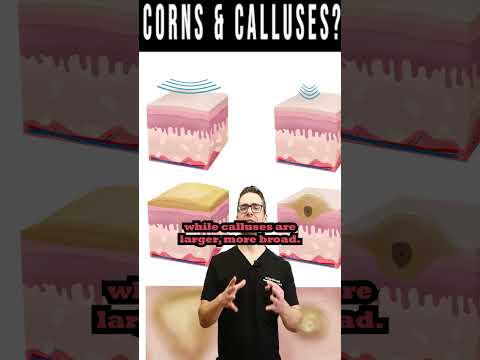
The Anatomy of a Corn
What truly distinguishes a corn from other skin conditions is its “nucleus” or hard center. While a callus is broad and relatively flat, a corn is shaped like an inverted pyramid. The point of this pyramid presses deep into the sensitive layers of your dermis. This unique structure is why you feel a sharp, localized pain every time your shoe brushes against the area. As the corn matures, the surrounding skin often becomes inflamed or swollen, adding a throbbing sensation to the sharp pain of the central core. This inflammation is a signal that the pressure has become too much for the tissue to handle.
Why Every Step Matters in Hinsdale
Living in the Chicagoland area often means staying active, whether you’re enjoying a weekend walk through downtown Hinsdale or spending an afternoon shopping at Oakbrook Center. When you’re constantly on the move, even a small corn can quickly turn an enjoyable outing into a painful ordeal. We’ve seen many neighbors try to manage these issues with over-the-counter pads, only to find the pain returns within days.
At Illinois Podiatry Specialists, we know that every step matters to your quality of life. Our approach goes beyond the surface; we look for the root cause of the pressure, such as a subtle bone misalignment or an ill-fitting shoe. By identifying what are corns on your feet in the context of your specific foot structure, our board-certified experts can provide a personalized plan that offers lasting comfort rather than a temporary fix.
The Three Main Types of Corns Found on Your Feet
Not all foot discomfort is identical. Identifying the specific variety of corn is the first step toward finding a lasting solution. When patients ask us what are corns on your feet, we explain that they generally fall into three distinct categories based on their location and texture. Hard corns, or Heloma Durum, are the most frequent type we treat. They appear as small, dense patches of skin with a visible, packed center. Seed corns (Heloma Mille) are much smaller and usually appear in clusters on the soles of the feet. While they might seem minor, they can feel like walking on a tiny pebble. Often, these skin changes are actually secondary symptoms of structural shifts, such as mild bunions, which force toes into unnatural positions.
Hard Corns and Hammertoes
In our Westmont and Burr Ridge clinics, we often see hard corns paired with hammertoes. A hammertoe occurs when a toe joint stays bent, creating a prominent “knuckle” that sits higher than the rest of the foot. This high point constantly grinds against the interior of your shoe. Whether you’re wearing dress shoes for a meeting in Hinsdale or heavy boots for a Chicago winter, that friction triggers the skin to thicken. Because the bone is pushing from the inside and the shoe is pressing from the outside, the skin has nowhere to go. This mechanical conflict is the primary reason hard corns form on the tops of the toes. Addressing the skin without correcting the mechanics usually leads to the corn returning within weeks.
Soft Corns and Toe Alignment
Soft corns, known clinically as Heloma Molle, present a different challenge. They typically develop in the moist spaces between your toes, most often between the fourth and fifth toes. These are not caused by shoe friction alone, but by bone-on-bone pressure between adjacent toes. Because of the natural moisture in these areas, the skin remains white and rubbery rather than hardening. As noted in clinical guides for Calluses and Corns, these are prone to maceration, where the skin becomes so soft it can easily tear or become infected. This can lead to significant pain and requires careful medical attention to prevent complications. If you’re struggling with persistent pain between your toes, it’s time to schedule an evaluation to address the underlying alignment. Understanding what are corns on your feet allows us to treat the cause, not just the symptom.
Corns vs. Calluses and Warts: How to Tell the Difference
Identifying exactly what are corns on your feet can be tricky because they often mimic other common skin conditions. While they may all look like patches of tough skin, the treatment for a corn is vastly different from the treatment for a wart or a callus. Misidentifying the problem leads to ineffective home remedies that can actually cause more irritation. A corn is typically small, circular, and has a deep center that points into the foot. In contrast, calluses are much broader and lack that painful central “plug” that characterizes a corn. Because corns are deep and conical, they cause a sharp, pinpoint pain that feels like a stone is stuck in your shoe.
Some patients notice a specific type of lesion that looks like a callus with a hole on foot. This can be particularly confusing for Hinsdale residents trying to self-diagnose at home. This “hole” is often the central core of a corn or the result of a callus that has developed a deep fissure. Because these conditions require different clinical approaches, a precise diagnosis is the only way to ensure you’re on the right path to wellness. We see many patients who have spent weeks using the wrong over-the-counter treatments before visiting us for a definitive answer.
Identifying a Plantar Wart
Warts are not caused by pressure; they are a viral infection. Unlike corns, which form due to friction, plantar warts are caused by the Human Papillomavirus (HPV). You can often spot the difference by looking closely at the skin’s surface. Warts disrupt the natural “fingerprint” lines of your foot, whereas corns do not. You might also see tiny black dots within a wart, which are actually clotted capillaries. One of the most reliable ways to tell them apart is the “pinch test.” If it hurts more when you pinch the bump from the sides than when you press directly on it, you’re likely dealing with a wart. For our Chicago patients, we offer advanced solutions like Swift microwave therapy for plantar wart removal in Hinsdale to clear these viral infections quickly and effectively. Patients in the western suburbs can also explore our advanced wart removal in Downers Grove for the latest evidence-based treatments that target the underlying virus rather than just the surface growth.
When a Corn is Actually a Callus
Calluses generally form on the weight-bearing areas of your foot, such as the heel or the ball of the foot. They are your body’s way of distributing weight over a larger surface area. Most calluses are rarely painful unless they become excessively thick and begin to crack. If you feel a sharp, pinpoint pain when walking, it is much more likely to be a corn. Understanding what are corns on your feet versus broad calluses helps us determine if we need to adjust your footwear or look at your gait. Our board-certified team is dedicated to providing the clarity you need to walk confidently again. Every step matters, and getting the right diagnosis is the first step toward pain-free mobility.

Safe Relief and Prevention Strategies for Chicagoland Walkers
Navigating the sidewalks of Downers Grove or commuting into the city requires footwear that supports your daily journey. However, many residents find that their choice of shoes is exactly what causes the painful skin thickening known as corns. When you’re trying to figure out what are corns on your feet, look first at your shoe’s toe box. A narrow or pointed front crowds the toes together, forcing them to rub against each other or the shoe’s interior. Switching to shoes with a wide, rounded toe box can provide immediate relief by reducing this mechanical stress. This is particularly vital during our harsh Illinois winters. Heavy, insulated boots paired with thick wool socks often create a cramped environment that accelerates corn formation through increased friction and trapped heat.
We strongly advise against “bathroom surgery.” It’s tempting to use a razor, file, or scissors to trim away the hard skin at home, but this often leads to deep infections or permanent scarring. Your feet deserve professional care that addresses the root cause safely and effectively. If you’re tired of the cycle of recurring pain, it’s time to schedule a professional consultation with our board-certified team. We provide a sterile environment and the precise tools needed to restore your comfort without the risks of home-grown methods.
The Danger of OTC Acid Treatments
Many over-the-counter medicated corn pads rely on salicylic acid to dissolve the thickened skin. While this might seem like a convenient fix, the acid doesn’t distinguish between the corn and the healthy skin surrounding it. This often results in chemical burns, rashes, or ulcers that are far more painful than the original corn. For patients who require specialized diabetic foot care management, these products are especially dangerous. A small chemical burn can quickly turn into a non-healing wound due to reduced circulation. Instead of using harsh acids, we recommend using non-medicated felt padding to cushion the area until you can see a specialist for a permanent solution.
Preventing Recurrence with Lifestyle Changes
Maintaining long-term comfort involves more than just treating the current symptom. Moisture-wicking socks are a simple yet effective tool for preventing the damp environment where soft corns thrive between the toes. We also recommend scheduling routine medical pedicures to keep your skin supple and monitor for early signs of pressure points. If you live with peripheral neuropathy or diabetes, checking your feet every single night is a non-negotiable habit. Understanding what are corns on your feet helps you recognize when a small bump needs expert attention before it limits your mobility. Our goal is to help you walk confidently through every season Chicagoland throws your way, ensuring that every step matters to your overall wellness.
Professional Corn Treatment at Illinois Podiatry Specialists
Understanding what are corns on your feet is the first step toward wellness, but professional intervention is the key to lasting relief. At our practice, we provide a painless debridement process that far exceeds what any home remedy can achieve. Our board-certified podiatrists use specialized, surgical-grade instruments to carefully remove the hardened layers of skin and, most importantly, the central “plug” or nucleus of the corn. Because this core is what presses against your nerves, removing it often provides immediate, significant relief in a single office visit. You’ll walk out of our clinic feeling a lightness that over-the-counter pads simply can’t replicate.
We don’t just treat the skin; we investigate the “why” behind the pressure. During your exam, we evaluate your foot’s structural alignment to identify issues like bone spurs or hammertoes that might be the true culprits. If your toes are rubbing together or against your shoes due to a structural deformity, the corn will continue to return until that mechanical conflict is resolved. For many of our patients, custom molded orthotics serve as a permanent, non-invasive solution. These medical devices are engineered to offload pressure from sensitive areas, realigning your gait and protecting your skin from future friction.
In more severe cases where a bone is significantly misaligned, we may discuss surgical interventions. These modern procedures are designed to realign the bone structure, effectively removing the internal pressure point that causes the corn to form. Whether through conservative care or advanced surgical techniques, our goal is to ensure you can return to the activities you love without the distraction of foot pain.
Why Professional Care is Superior
Seeking help at our Hinsdale office ensures your feet are treated in a sterile environment, which is critical for preventing the infections often seen with “bathroom surgery.” Beyond safety, a professional consultation allows us to rule out more serious issues that can mimic the appearance of a corn, such as small cysts or foreign bodies embedded in the skin. We use precision tools that allow for much deeper and more accurate clearing of the lesion than any file or pumice stone could provide. This comprehensive approach is why our patients experience longer periods of comfort and a much lower rate of recurrence.
Schedule Your Consultation Today
If you’re a resident of Oak Brook, Westmont, or La Grange struggling with persistent foot pain, we invite you to take the next step in your journey toward mobility. You don’t have to navigate the confusion of what are corns on your feet alone. Our compassionate team is dedicated to providing personalized care that understands your lifestyle and your goals. At Illinois Podiatry Specialists, we believe that every step matters. Book your appointment today and put your best foot forward into a future of pain-free movement.
Walk Confidently Toward Lasting Wellness
Understanding what are corns on your feet is the first step in moving beyond temporary fixes and finding permanent relief. We’ve explored how these painful spots are actually mechanical signals from your body, often linked to structural issues like hammertoes or seasonal footwear friction. By choosing professional debridement over risky home remedies, you ensure your feet remain healthy and infection-free. Our board-certified podiatric surgeons have been serving the Hinsdale community for over 25 years, utilizing advanced in-office technology to provide immediate relief during a single visit.
You don’t have to let a localized pressure point slow you down. Whether you’re commuting into the city or walking through local parks, your comfort is our priority. We invite you to book your expert foot consultation at Illinois Podiatry Specialists today to start your personalized journey toward pain-free mobility. It’s time to put your best foot forward and reclaim the joy of movement, because at our practice, every step matters.
Frequently Asked Questions
Can I cut off a corn on my foot at home?
You should never attempt to cut or scrape a corn at home. This practice, often called “bathroom surgery,” significantly increases your risk of deep tissue infection and permanent scarring. Our board-certified team uses sterile, precision instruments to safely remove the thickened skin and the central core. This professional approach ensures the surrounding healthy tissue remains protected while providing you with immediate relief.
How long does it take for a corn to disappear after treatment?
You will typically feel immediate relief the moment the central core is professionally removed by a podiatrist. While the sharp, pinpoint pain vanishes instantly, the skin surface usually requires 7 to 14 days to fully heal and smooth over. During this time, we may recommend specific padding or footwear adjustments to ensure the area isn’t subjected to the same pressure that caused the corn initially.
Are corns on feet contagious like warts?
No, corns are not contagious and cannot be spread from person to person. Unlike warts, which are caused by the Human Papillomavirus (HPV), corns are a purely mechanical response to friction. When you ask what are corns on your feet, remember they are protective shields built by your skin. They don’t involve a virus, so you don’t need to worry about sharing them with family members.
Why do my corns keep coming back in the same spot?
Corns recur because the underlying biomechanical pressure hasn’t been corrected. If a hammertoe or a bone spur continues to rub against your shoe, your body will keep building that protective skin shield. We use advanced diagnostic tools to identify these structural issues. Often, a pair of custom orthotics can permanently offload that pressure and stop the cycle of recurrence for good.
What happens if a foot corn is left untreated?
Leaving a corn untreated can lead to serious complications like skin ulcers or infected bursitis. For the 37 million Americans living with diabetes, according to CDC data, an untreated corn is particularly dangerous as it can hide a developing wound. Over time, the constant pressure may cause the tissue beneath the corn to break down, leading to an open sore that is difficult to heal.
Is corn removal painful when done by a podiatrist?
Professional corn removal is a painless procedure for the vast majority of our patients. Since a corn consists of layers of dead skin cells, trimming them away doesn’t involve living tissue or nerves. Our specialists are highly trained to perform debridement with extreme precision. We prioritize your comfort and ensure you feel relaxed throughout the entire process, leaving our office with a much lighter step.
Does insurance cover professional corn removal?
Most major insurance providers cover podiatry consultations and treatments for symptomatic corns. If the corn causes physical pain, affects your mobility, or poses a risk due to underlying conditions like diabetes, it is typically considered a medical necessity. We recommend checking with your specific carrier to understand your co-pay and deductible requirements before your visit. Our office staff is always available to help clarify your coverage.
How can I tell if my foot corn is infected?
You can identify an infected corn by looking for persistent redness, warmth, or yellow drainage. If the pain becomes throbbing or you notice significant swelling around the toe, it is a clear signal that bacteria have entered the skin. Infected corns require prompt treatment with antibiotics and professional drainage to prevent the infection from spreading to the bone or deeper tissues of the foot.