


Ingrown Toenail Correction does not always mean removing the whole nail. Depending on the nail and your symptoms, treatment may involve conservative care, an Onyfix nail brace, or removal of only the troublesome edge. The right approach depends on the toe’s condition and your health history, not a one-size-fits-all plan.
If a sore, swollen toe makes walking or wearing shoes uncomfortable, it’s understandable to wonder whether home care is enough, whether treatment will hurt, or whether the nail could grow back ingrown. This article explains common causes and the differences between conservative care, Onyfix nail-brace correction, and ingrown toenail removal. It also covers when it’s wise to see a podiatrist instead of trying to manage the problem yourself.
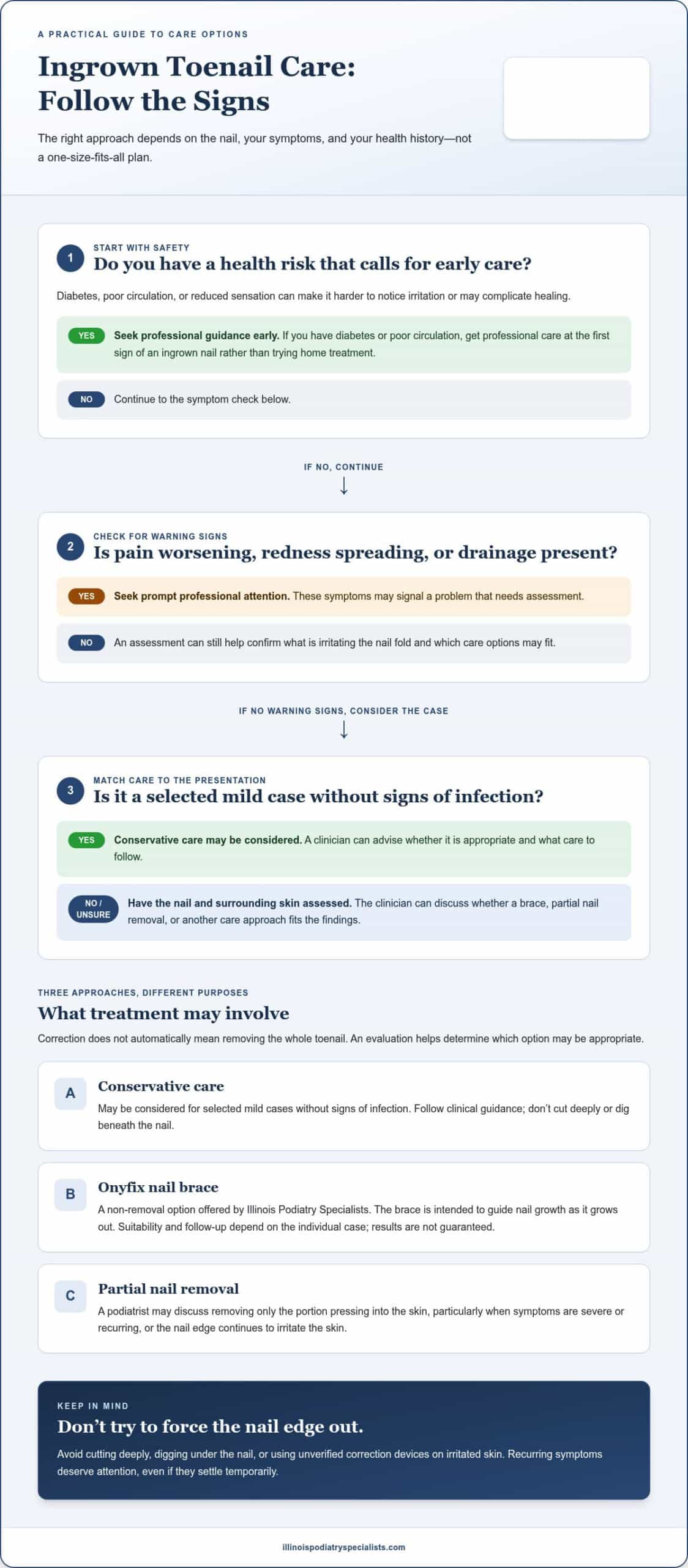
Worsening pain, spreading redness, or drainage are reasons to seek prompt professional attention. If you have diabetes or poor circulation, seek professional care at the first sign of an ingrown nail rather than attempting home treatment. Illinois Podiatry Specialists provides Onyfix correction and ingrown toenail removal for patients in Hinsdale, Oak Brook, Downer Grove, Westmont, Burr Ridge, and La Grange. An evaluation helps match the care approach to your symptoms and health.
Key Takeaways
- Ingrown Toenail Correction starts with identifying what is irritating the nail fold and assessing your symptoms, not simply trimming the nail for appearance.
- Conservative care, Onyfix nail-brace correction, and partial nail removal address the problem in different ways. An evaluation can help determine which option may be appropriate.
- Avoid cutting deeply, digging under the nail, or using unverified correction devices on irritated skin.
- Worsening pain, spreading redness, drainage, diabetes, or poor circulation are reasons to seek professional evaluation promptly.
- Illinois Podiatry Specialists provides Onyfix correction and ingrown toenail removal in Hinsdale and nearby communities.
What Is Ingrown Toenail Correction, and When Is It Needed?
An ingrown toenail is a nail whose edge presses into or grows into the surrounding skin, irritating the nail fold. The area may become tender, red, or swollen, and the skin can appear to rise over the nail edge. This differs from ordinary nail discomfort caused by pressure or a minor injury without the nail edge irritating the skin.
Ingrown Toenail Correction is not simply cosmetic trimming. It means assessing the nail and surrounding tissue to decide how to address irritation, inflammation, or possible infection. The Ingrown nail overview describes common causes and management approaches, but symptoms alone can’t confirm what’s happening in your toe.
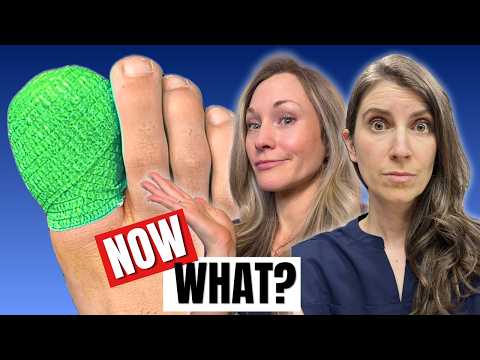
For a visual overview of care after nail removal, watch this podiatrist guide:
How can you tell if a toenail is ingrown?
Look for tenderness along one side or corner of the nail, redness, swelling, or skin pressing against or partly covering the nail edge. Pressure from shoes and walking may make the toe more uncomfortable. These signs can have other causes, so a podiatric assessment can help determine whether the nail is ingrown and what care may be appropriate.
When should you seek podiatric care?
Arrange prompt assessment if pain is worsening, redness is spreading, or you notice drainage or other signs that could indicate infection. Recurring symptoms also deserve attention, even if they settle temporarily, because the nail edge may continue to irritate the skin.
If you have diabetes, poor circulation, or reduced sensation in your feet, seek professional guidance early. Reduced feeling can make it harder to notice worsening irritation, while circulation problems may complicate healing. Severe or persistent symptoms are not a reason to dig under the nail or cut deeply at home. An examination can help determine whether conservative care, nail-brace correction, or removal is appropriate for your situation.
How Ingrown Toenail Correction Works: From Nail Bracing to Removal
Correction may involve conservative clinical guidance, a nail brace, or removal of the nail edge causing irritation. The goal is to choose an approach that fits the problem, rather than assume every ingrown toenail needs the same procedure. The ingrown toenail diagnosis and treatment guide from Mayo Clinic also describes care options that vary according to the condition and its severity.
Treatment choice depends on the nail, your symptoms, and your health history. A podiatrist can examine the nail edge and nearby skin, look for signs of infection or recurring irritation, and discuss appropriate options. Conservative care may be considered for selected mild cases, but it isn’t suitable for every toe, particularly when symptoms are persistent or worsening.
What is Onyfix ingrown toenail correction?
Onyfix is a nail-brace option Illinois Podiatry Specialists offers for ingrown toenail correction. The brace is applied to the nail with the aim of guiding its growth as it grows out. It does not involve removing the entire nail, but it may not be appropriate for every person or every presentation. A clinical assessment helps determine whether it suits the nail and surrounding skin. The clinician can explain how it is applied, what to expect, and any follow-up based on your individual case.
When might partial nail removal be considered?
If the nail edge continues to press into the skin, or symptoms are severe or recurring, a podiatrist may discuss partial nail removal. The clinician examines the affected edge and surrounding tissue, including any inflammation or signs of infection, before recommending treatment. Partial removal addresses the troublesome portion of the nail rather than removing the whole nail. Aftercare and whether further treatment is appropriate depend on the findings and your health history.
These approaches address the problem differently: conservative care may suit selected mild cases, Onyfix uses a brace to guide nail growth, and partial removal takes away the irritating nail edge. None is the right choice for everyone. An evaluation for ingrown toenail care can help clarify which approaches fit your symptoms and goals.
Onyfix, Home Care, or Nail Removal: How Do the Options Compare?
Ingrown Toenail Correction doesn’t automatically mean removing the entire toenail. Depending on the examination, care may involve conservative management, a nail brace, or removal of only the nail edge irritating the skin. Each option serves a different purpose, and none is right for everyone.
| Approach | Purpose and clinical context | What to expect |
|---|---|---|
| Conservative care | May be considered for selected mild cases without signs of infection. | A clinician can advise whether this approach is appropriate and what care to follow. Don’t cut deeply or dig beneath the nail. |
| Onyfix nail brace | A non-removal correction option offered by Illinois Podiatry Specialists. A clinician assesses whether it suits the nail and surrounding skin. | The brace is intended to guide nail growth. Suitability and follow-up depend on the individual case, and results aren’t guaranteed. |
| Partial nail removal | A clinician may consider removing the portion pressing into the skin, particularly when symptoms are persistent or recurring. | The treatment addresses the affected nail edge, not necessarily the whole nail. The clinician explains the procedure and aftercare for your situation. |
Infection, recurring symptoms, nail shape, and health history can all affect which approach is considered. The Harvard Health overview of ingrown toenails also discusses contributing factors and treatment approaches. An assessment helps distinguish a mild issue from one that needs more direct care.
Is a nail brace a substitute for toenail removal?
Not exactly. A brace and partial removal work differently, so they are not interchangeable options with the same expected outcome. A podiatrist considers how the nail is growing, the degree of irritation, whether symptoms have returned, and your overall health before discussing care. An examination helps determine whether bracing or removal is appropriate for the specific toe.
Why can an ingrown toenail keep coming back?
Nail shape, trimming habits, repeated pressure, and footwear that presses on the toe may contribute to ongoing irritation. If the problem returns, reassessment can help identify possible contributors and whether the care approach should change. Repeatedly trimming into the corner may worsen irritation or injure the skin, so recurrence is a reason to seek guidance rather than keep digging at the nail yourself.
What to Do Before and After Ingrown Toenail Treatment
Some preparation can make an appointment more useful and help you understand what to expect. Ingrown Toenail Correction should be guided by an examination, especially if the toe is worsening or you have a condition that affects sensation or circulation.
- Note your symptoms. Record when they began, whether they’re changing, and whether the problem has happened before.
- Arrange an evaluation. Seek prompt care for worsening pain, drainage, spreading redness, or suspected infection. If you have diabetes, poor circulation, or reduced sensation, get professional guidance early rather than attempting home treatment.
- Discuss your options. Share relevant health conditions, medications, and anything you’ve already tried. Your podiatrist can examine the nail and surrounding skin before explaining suitable approaches.
- Follow your individualized instructions. Aftercare and follow-up depend on the treatment chosen and your clinical circumstances. Follow the care plan provided for your toe.
Don’t cut deeply into the nail, dig beneath its edge, or apply an unverified correction device to irritated skin. These steps can injure surrounding tissue or make the problem harder to assess. If symptoms are severe or persistent, arrange an evaluation rather than trying to correct the nail yourself.
How should you prepare for a podiatry visit?
Before your appointment, note when the discomfort started, any previous episodes, and health conditions such as diabetes or circulation problems. Bring a medication list and mention any home treatments you’ve tried. The clinician will examine the nail and nearby skin, then discuss care options in light of the findings and your health history.
What should you expect during recovery?
Aftercare varies. Instructions for nail-brace correction may differ from those following partial nail removal. Follow your clinician’s guidance about wound care, activity, and whether follow-up is needed. General advice or another person’s experience is not a substitute for your own care plan.
Contact your podiatrist for reassessment if pain worsens, drainage appears, or redness spreads after treatment. If you have diabetes, poor circulation, or reduced sensation, take new or changing symptoms seriously and seek professional guidance promptly. Schedule ingrown toenail care for an evaluation and an individualized discussion of treatment.
Ingrown Toenail Correction in Hinsdale and Nearby Illinois Communities
Toe pain can make every step uncomfortable. Illinois Podiatry Specialists provides ingrown toenail care, including Onyfix correction and ingrown toenail removal. For patients in Hinsdale and nearby communities, an evaluation can help identify what’s irritating the nail and which treatment approaches may fit their symptoms and health history.
How does a podiatrist tailor ingrown toenail correction?
There’s no single correction plan for every toe. The podiatrist considers your symptoms, the nail’s shape and condition, whether the problem has happened before, and health factors such as diabetes or circulation concerns. The team can explain available approaches, including Onyfix correction and removal of the affected nail portion, and describe what each involves.
It’s understandable to have questions about discomfort, treatment, or the possibility of another ingrown nail. Sharing those concerns helps make the conversation collaborative. The goal is to understand your situation and make an informed care decision together, without assuming one method is right for everyone.
Where can local patients find ingrown toenail care?
Illinois Podiatry Specialists serves patients in Hinsdale, Oak Brook, Downer Grove, Westmont, Burr Ridge, and La Grange. Whether you’re dealing with a newly sore nail edge or symptoms that keep returning, a podiatric evaluation can help determine whether correction or removal should be considered. You don’t have to wait until walking or wearing shoes becomes especially uncomfortable to seek guidance.
For individualized Ingrown Toenail Correction close to home, schedule an ingrown toenail evaluation with Illinois Podiatry Specialists. The team can assess your symptoms, discuss appropriate options, and explain the next steps for your foot health.
Take the Next Step Toward Comfortable Steps
Ingrown Toenail Correction doesn’t automatically mean removing the whole nail. Options may include Onyfix correction or removal of the affected nail edge. The right approach depends on your symptoms, nail condition, and health history. An evaluation can help clarify what’s causing the irritation and whether professional care is appropriate, especially if symptoms are recurring or getting worse.
At Illinois Podiatry Specialists, Dr. Adam E. Fleischer, Dr. Robert G. Goshgarian, and Dr. Michael J. Goshgarian bring decades of combined clinical experience to podiatric care. The practice provides both Onyfix ingrown toenail correction and ingrown toenail removal, with treatment decisions guided by individual needs.
If toe discomfort is affecting your daily steps, you don’t have to decide on a treatment alone. Schedule an ingrown toenail evaluation with Illinois Podiatry Specialists in Hinsdale and nearby communities, including Oak Brook, Downer Grove, Westmont, Burr Ridge, and La Grange.
Frequently Asked Questions
Can an ingrown toenail be corrected without removing the whole nail?
Yes. Ingrown Toenail Correction doesn’t always require removing the whole nail. Depending on the examination, care may involve conservative management, a nail brace such as Onyfix, or removal of only the nail edge pressing into the skin. The appropriate option depends on factors such as symptoms, inflammation, recurrence, and health history. A podiatrist can assess the toe and explain which approaches may suit your situation.
Is Onyfix used for ingrown toenail correction?
Yes. Illinois Podiatry Specialists offers Onyfix as a nail-brace option for ingrown toenail correction. The brace is intended to guide nail growth, but it isn’t suitable for every nail or every clinical situation, and individual results can vary. A podiatrist can examine the nail and surrounding skin, discuss whether this approach may fit your needs, and explain what to expect with application and follow-up.
Can I correct an ingrown toenail at home?
Home care may be appropriate only for selected mild cases without signs of infection, and it isn’t a substitute for assessment when symptoms are concerning or persistent. Don’t cut deeply into the nail, dig beneath its edge, or apply an unverified correction device to irritated skin. These steps can injure surrounding tissue. If pain worsens or you’re unsure what’s causing it, arrange a podiatric evaluation.
When should I see a podiatrist for an ingrown toenail?
See a podiatrist promptly if pain is worsening, redness is spreading, drainage appears, or the problem keeps returning. Seek professional guidance early if you have diabetes, poor circulation, or reduced sensation in your feet, since these conditions can make foot problems harder to monitor and heal. Avoid trying to dig out the nail at home. An examination can assess the nail and surrounding skin and guide next steps.
Does ingrown toenail correction hurt?
How treatment feels varies with the approach, the toe’s condition, and the individual. A nail brace and partial nail removal are different procedures, so neither should be assumed to be pain-free or to feel the same for everyone. Tell your podiatrist about concerns such as sensitivity or fear of treatment. They can explain the proposed care and what sensations or aftercare may apply to your situation.
Can an ingrown toenail come back after correction?
Yes, symptoms can return. Nail shape, repeated pressure, footwear, and trimming habits may contribute to ongoing irritation, while recurrence depends on the individual and treatment used. If the problem comes back, arrange a reassessment rather than repeatedly cutting into the nail corner yourself. A podiatrist can review the nail, your symptoms, and prior care to discuss appropriate options.
How do I get ingrown toenail correction near Hinsdale, Illinois?
Illinois Podiatry Specialists provides ingrown toenail care, including Onyfix correction and ingrown toenail removal. Patients can seek care in Hinsdale and nearby communities, including Oak Brook, Downer Grove, Westmont, Burr Ridge, and La Grange. If you have new or recurring symptoms, schedule an evaluation so the team can assess your toe and discuss appropriate care. Treatment recommendations depend on your examination and health history.